Primary schools’ climate conference 2025 -

Published: 11 May 2026

The primary schools’ conference was held on Thursday 23 October at Garth Hill School.

The conference was organised and hosted by The Harmony Project.

Schools involved

Thirty-nine students from the following 11 schools were in attendance:

  • College Town Primary School
  • Crowthorne CE Primary School
  • Holly Spring Primary School
  • New Scotland Hill Primary School
  • Owlsmoor Primary School
  • The Pines Primary School
  • Uplands Primary School and Nursery
  • Warfield CE Primary School
  • Whitegrove Primary School
  • Wildridings Primary School
  • Winkfield St Mary’s CE Primary School
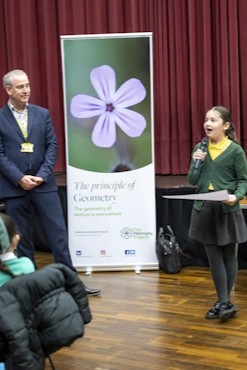
A primary school aged girl stands in front of an audience with a microphone. Behind her is a banner which reads "the principle of geometry".

Programme

Students took part in a number of activities to help them think about key sustainability topics. They looked at energy, food and biodiversity. 

During the day, students:

  • analysed graphs of energy use at a primary school
  • scored packed lunches on how healthy they are for us and for the planet
  • studied the geometry of nature

Students also wrote action plans to take back to their respective schools. 

Commitments included a range of great ideas, such as:

  • introducing composting
  • bee-keeping
  • energy saving competitions between year groups
  • allotments to grow the school’s own food
A group of children sat at tables holding up different numbers of fingers.
A primary-school aged girl in a red jumper stands and speaks into a microphone.
Children and two adults sit around a table looking at the contents of a packed lunchbox.

Climate action plans

The following climate action plans were identified and created by the primary schools:

Ascot Heath Primary School

Logo: Ascot Heath Primary School
  1. Reduce energy use by tracking our energy consumption, holding an interschool competition, and creating a club. 
  2. Improve student awareness of our school’s green spaces by having more outdoor activities for more curriculum subjects and creating eco-roles for students. 
  3. Improve our school’s biodiversity by allocating an area of our field for bee hives and working with the Ascot community. 
     

College Town Primary School

Logo: College Town Primary School
  1. Reduce our energy use by monitoring our consumption, creating new student eco-warriors and school councillors, and installing solar panels.
  2. Reduce our food waste and make our lunches healthier by sharing leftover key stage 1 fruit with key stage 2 students, working with the kitchen to monitor waste and encourage minimising waste.
  3. Recycle more by putting up posters in staff rooms, provide bins for soft plastic and food composting, and monitoring the recycling bins. 

Crowthorne CE Primary School

Logo: Crowthorne CE Primary School
  1. Work towards healthier pack lunches by creating a ‘healthy lunch’ competition between classes and working with parents.

Holly Spring Primary School

Logo: Holly Spring Primary School
  1. Reduce our energy consumption by monitoring our energy use, creating rewards and certificates for energy savings, and meeting with the site manager.
  2. Engage more students by creating student energy monitors and school councillors, and by reporting our findings weekly.
  3. Improve awareness of climate change by creating posters and signs, putting signage on light switches and computers, and awareness campaigns within year groups. 
     

New Scotland Hill Primary School

Logo - New Scotland Hill School
  1. Reduce our waste by turning all food waste in to compost to be used on school gardens. 

Owlsmoor Primary School

Logo: Owlsmoor Primary School
  1. Reduce our energy consumption by monitoring our energy use, setting targets, and installing energy saving measures like LED lighting.
  2. Encourage more recycling in the school by installing more paper recycling bins and by creating posters to raise awareness.
  3. Make packed lunches better for students and the environment by sending out newsletters to students and parents to encourage healthier eating and using less packaging. 
     

The Pines Primary School

Logo: The Pines Primary School
  1. Nominate ‘Energy Savers’ around the school who are both staff and children who will be responsible for turning off lights and boards, and for closing doors and windows when appropriate. 
  2. Develop our allotment so that we can grow plants and flowers to eat and encourage wildlife.
  3. Help children have more sustainable lunchboxes by creating a lunch box challenge, producing an information leaflet on how to achieve a sustainable lunch, and issuing a survey to monitor lunchboxes. 
     

Uplands Primary School and Nursery

Logo: Uplands Primary School
  1. Reduce our energy use by monitoring our energy use, allowing 5 minutes extra play and other rewards to year groups that reduce energy use, and holding school trips to educate about energy.
  2. Reduce our energy use over the weekends and holidays by working with teachers, office staff, kitchen staff, and site management staff to make sure lights and electronics are switched off.
  3. Improve how healthy and sustainable our lunches are by creating a lunchbox challenge and prizes, and having fruit days. 

Warfield CE Primary School

logo: Warfield primary school
  1. Improve our energy system by using energy conservation and efficiency measures and installing solar panels. 
  2. Improve our biodiversity by planting hedges and trees, and working with the parents, governors, and the school council. 
  3. Improve our air quality by electing clean air monitors, stop cars from idling in the car park, and recording our air quality. 
     

Whitegrove Primary School

Logo: Whitegrove Primary School
  1. Monitor and reduce our energy use by holding eco-warrior assemblies, putting up posters, and creating competitions with rewards for year groups that reduce energy use.
  2. Improve our school’s biodiversity by creating a nature project for every year group, and increasing our plant species on school grounds. 
     

Wildridings Primary School

Logo: Wildridings Primary School
  1. Reduce our energy use every week by creating an ‘Energy Challenge’ and recording our energy use. 
  2. Improve student health and wellbeing by creating a vegetable patch and encouraging all children to be involved, try a range of vegetables, and grow plants they are interested in. 
  3. Make the school more animal friendly by making bug hotels, bird feeders, and getting all students to do a litter pick. 
     

Winkfield St Mary’s CE Primary School

logo: Winkfield St Mary's CE Primary School
  1. Focus on reducing our energy consumption by monitoring energy use weekly, report this in assemblies, and take energy savings measures like turning lights off.
  2. Reduce our school's food miles and improve how healthy our lunches are by growing our produce in the allotment, creating a salad bar, and raise awareness of packaging and composting.
  3. Stop wastage in the school by recycling, creating posters to stop littering, and composting lunch food waste.