Overview of the woodland
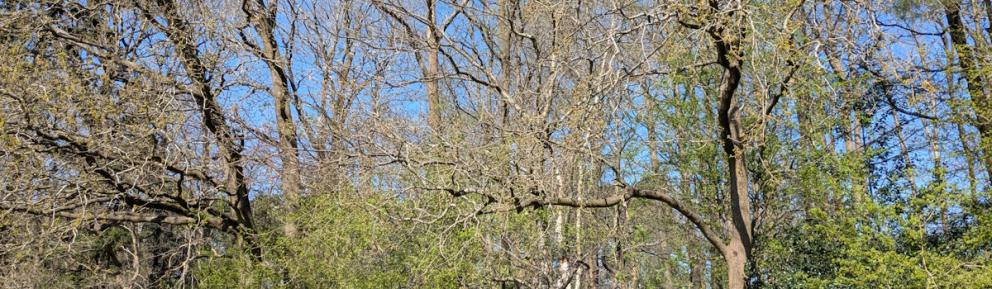
The woodland at Coral Reef is managed by Parks and Countryside. It wraps around the leisure centre and provides a connection for wildlife between Nine Mile Ride and Swinley Forest. It is roughly 2.5 hectares in total and is a mixture of older native broadleaved woodlands and conifer plantation.
Proposed work
We are planning to improve the biodiversity value of the woodland by:
- removing invasive species, such as common rhododendron and snowberry
- selectively thinning non-native trees to create light and space
- replanting with native trees and shrubs
- monitoring woodland recovery and adjusting our management accordingly
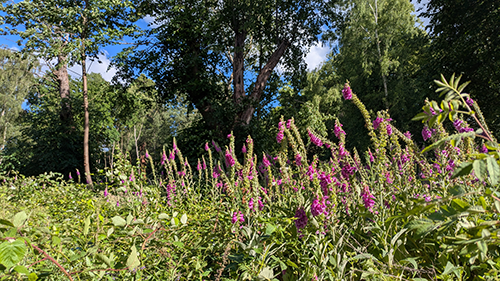
We are thinning small numbers of trees (less than 5% of the total canopy).
We will retain as much timber as possible on-site to create deadwood habitats.
Each felled tree will be replaced with at least 30 new native tree whips, which will be protected and maintained until they are established.
Initial scrub removal will start on Monday 14 September. It will last a few days. This will be followed by tree thinning. Tree thinning is expected to take around 2 weeks and will start before the end of September.
Tree planting will follow in the next year, once the ground has had time to settle and recover from any disturbance.
You can download a copy of our project plan below.
| Attachment | Size |
|---|---|
Document
Coral Reef woodland plan
|
2 MB |
Why we are doing this
This work will help to improve the biodiversity value of the woodlands at Coral Reef.
It forms an important connecting habitat within Swinley Forest, along Nine Mile Ride and to the woodlands along the Bagshot Road and beyond.
The trees we propose to remove are largely older plantation conifers and are not considered beneficial to this area by the Forestry Commission.
They have lower biodiversity value compared to native species, which we’re planning to re-introduce. If left unmanaged, they may cause future maintenance concerns.
Scrub such as cherry laurel and common rhododendron are non-native and highly invasive. They create dense shading and will harm native plants in the woodland. By removing shrubs like these and thinning the older conifers, we will create space to plant new native trees such as:
- oak
- beech
- hornbeam
- hazel
- hawthorn
- yew
These will be more useful to our local bird, mammal and insect species.
These biodiversity improvements are also important for mitigating the impact of local developments. They will help to supply offsite biodiversity units for biodiversity net gain (BNG).
Woodlands in decline
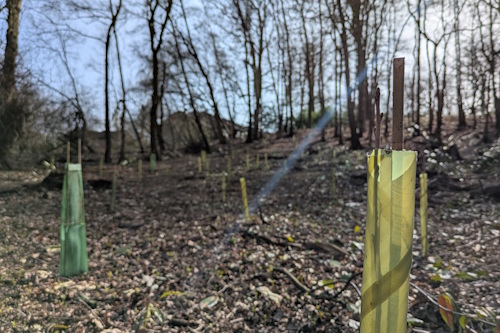
Woodlands are in decline across the UK, currently covering just 10% of our landscape. The average in mainland Europe is 40%.
Work to restore native woodland will help:
- counteract the decline of native woodland species
- provide an important habitat for birds, bats, insects and mammals such as hedgehogs
- support the development of wildlife corridors through Bracknell's urban environment
- improve local air quality by absorbing carbon dioxide and pollution
- support our aim to become net zero by 2050
Precautions
We have carefully planned this work in partnership with:
- The Forestry Commission
- Natural England
- Everyone Active
- local ecologists
This makes sure we have the necessary licenses and that we are working sensitively with the needs of site users and wildlife in mind.
We want to keep disruption to a minimum, which is why we will:
- conduct work during normal working hours from Monday to Friday, and outside bird nesting season and school holidays
- provide diversions where we need to temporarily close paths
- display site notices with information about the work
- share updates about the work via our communication channels
Funding the work
The work is being funded by section 106 local development money. This must be spent towards:
- new woodland creation or the enhancement of existing woodland within the council's area
- improving public open spaces that people can use and that will benefit residents of the development
The funding is being set aside for this biodiversity improvement project as it meets these criteria.
The improvements are designed to reduce the impact of local developments. They will also provide offsite biodiversity units for BNG.
This would contribute to the recovery of nature while developing land. It is making sure the habitat for wildlife is in a better state than it was before development.
Other BNG projects
This is one of several projects we are planning or undertaking to provide a net gain to biodiversity. Other projects include: