Biodiversity report 2024 to 2025 - Part B: Biodiversity Duty Report

Published: 18 March 2026

Biodiversity report 2024 to 2025
Part B: Biodiversity Duty Report

Published: 18 March 2026

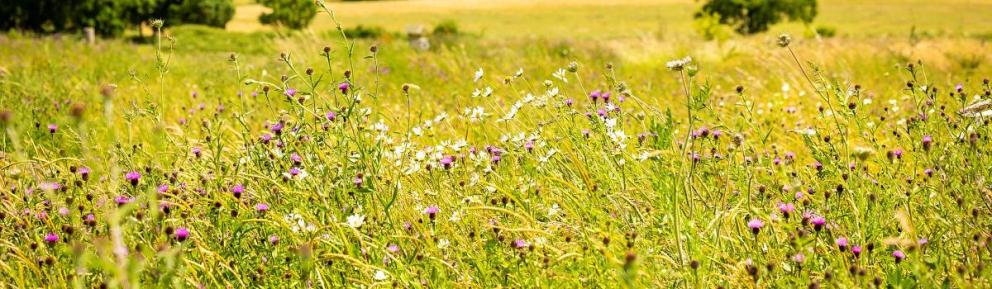
A close up of Frost Folly meadow, full of colourful wildflowers.

We are committed to protecting and enhancing biodiversity in our work. This section lays out:

  • our key policies and objectives related to nature
  • actions we have taken during the reporting period
  • what we will do in future

The reporting period is from 1 January 2024 to 31 December 2025.

Strategies, policies and objectives for biodiversity

The Bracknell Forest BAP is a partnership plan for protecting and enhancing nature in the borough. The plan is delivered by collaboration across organisations, working under the Bracknell Forest Nature Partnership. We coordinate the partnership and track progress against targets in the plan.

The BAP's objectives are to:

  • track sites
  • monitor and survey
  • create and restore habitats
  • designate sites
  • connect habitats
  • enhance sites for wildlife
  • raise awareness
  • provide access to nature
  • take strategic action
  • work towards climate mitigation
  • work towards climate adaptation

The plan has 67 targets across 6 habitat themes. The targets include:

  • monitoring key habitats and sites
  • improving habitats
  • engaging the community through volunteering and wildlife activities

This report only accounts for Bracknell Forest Council’s actions towards the BAP. A fuller review of progress across all partners will take place at the mid-point and the end of the BAP period.

The BFLP is the principal planning policy document for the Borough. It will guide development up to 2037.

The BFLP contains objectives and policies. The objectives and policies most relevant to biodiversity are:

  • Objective B: Protect, enhance, and conserve existing assets and create new assets
  • LP 27 Climate change
  • LP 30 Green infrastructure
  • LP 31 Designated nature conservation and geological sites
  • LP 32 Thames Basin Heaths Special Protection Area
  • LP 53 Biodiversity  
  • LP 54 Protection of trees and hedgerows

Supplementary Planning Documents (SPDs) give further guidance on some Local Plan policies. The Thames Basin Heaths Special Protection Area SPD is most relevant for biodiversity.

The Council Plan sets out the overall ambition for what we want to achieve for and with residents, businesses and partners.

One of the three Council Plan priorities is a green and sustainable environment. Within this, there are 2 ambitions focused on biodiversity. These are:

  • collective action to address and adapt to the climate and biodiversity emergency
  • fostering sustainability, biodiversity, and wellbeing through our green spaces and parks

Their associated measures are:

  • increasing new trees being supported to independent growth
  • increasing biodiversity across the borough, funded by new developments
  • increasing Suitable Alternative Natural Greenspaces (SANG) and open space through the planning process
  • increasing volunteering within the borough’s parks and countryside

The council has declared a climate and biodiversity emergency. The declaration includes ambitions relating to biodiversity. These are to:

  • report annually on the state of nature in the borough
  • include expected ecological impacts in decision making reports

The Climate Change Strategy embeds biodiversity throughout, recognising the benefit of tackling nature recovery and climate change together. 

Progress on the Climate Change Strategy is reported annually. This report will not duplicate reporting against the Climate Change Strategy. 

However, where biodiversity actions have taken place, they may be reported in both the Climate Change Strategy annual report and the Biodiversity Duty report.

Local Nature Recovery Strategies are plans to help restore nature and improve the environment. They are being introduced across England under the Environment Act 2021. Each one sets priorities for nature recovery and identifies actions in the places where they will have the greatest impact.

Bracknell Forest falls within the Berkshire strategy area.

The Berkshire LNRS includes:

  • description of area - information about nature in Berkshire including challenges and opportunities
  • priorities and potential measures - priorities for nature recovery and habitat-focused actions to achieve these priorities
  • species priorities list - actions and guidance for species which need further specific support
  • local habitat map - mapping existing important sites and the best places for habitat improvement measures

These strategies are under development by Natural England. There are not currently any in place in Bracknell Forest. 

Actions to deliver policies and objectives for biodiversity

Strategy and policy development

Up-to-date strategies, policies and processes underpin our action for biodiversity. We have updated, published or started work on the following strategies, policies and processes within the reporting period.

A draft BAP 2024 to 2029 was co-produced with partners through workshops and discussions. The plan built upon the previous BAP for 2018 to 2023.

The draft was approved for public consultation by Executive (now known as Cabinet) in April 2024. A 4-week consultation took place in May and June 2024.

The final BAP 2024 to 2029 was approved and published in September 2024.

Following an extensive development process and public consultation, the council published the BFLP in April 2024.

An update to the Thames Basin Heaths Special Protection Area SPD was approved on 29 April 2025. It came into effect for all planning applications validated from 8 May 2025. This followed a public consultation from January to February 2025.

The council is developing a Biodiversity and Green Infrastructure SPD. This will provide guidance on how to consider biodiversity in development proposals within Bracknell Forest.

Part A of this report has been developed as the first version of the annual report on nature in the Borough. It contributes to:

  • the ambition of the Climate and Biodiversity Emergency declaration
  • BAP Target 5: Produce an annual report on the state of nature in Bracknell Forest 

The council has developed a digital impact assessment tool. The tool helps staff and decision makers to assess the impact of decisions on our residents in relation to:

  • health and wellbeing
  • equalities
  • climate change and sustainability (including biodiversity)

We began using it to support decisions in 2025.

This contributes to the ambition of the Climate and Biodiversity Emergency declaration.

Throughout 2024 and 2025, we engaged with the LNRS development process. We attended working groups and encouraged other local stakeholders to get involved in developing the LNRS.

As a supporting authority, in November 2024, our Cabinet approved the draft LNRS for public consultation. The consultation ran for 6 weeks and was led by the Royal Borough of Windsor and Maidenhead (RBWM).

Cabinet supported the approval of the final LNRS in July 2025. RBWM published the strategy and it came into effect in October 2025.

This contributes to BAP Target 12: Engage with the development of the Berkshire LNRS.

Management of council land

Bracknell Forest Council owns and manages over 150 parks and open spaces through our Parks and Countryside teams, covering more than 450 hectares. Smaller areas such as grass verges and pockets of woodland add another 170 hectares.

Therefore, the management of council-owned land is a key opportunity to support biodiversity.

Management plans and procedures

Many of the borough’s designated sites have management plans in place, but some need updating. In 2025, our ranger service started developing more detailed plans for key sites. A review of management plans will follow. 

We also started creating a clear plan for grassland management to make sure our hay-cutting and grazing follow good ecological practice and protect wildlife.

In 2025:

  • 12 sites were hay-cut and baled
  • 7 sites were cut and collected
  • 6 sites were grazed

This covers about 130 hectares of grassland. The new plan will make management more consistent and better for biodiversity.

In addition, in recent years we have taken opportunities at our Parks and Countryside sites to change areas from being cut every 14 days to annual cutting or conversion to woodland or scrub. This includes areas at The Parks, Wooden Hill and Westmorland Park.

This contributes to BAP Target 65: All public greenspace management plans to include biodiversity actions.

Habitat improvements

We have taken the following actions to create and improve habitats during the reporting period:

3.47ha of grassland was enhanced at The Parks, Jennett’s Hill (see Habitat Banks section below) and Pope's Meadow. In summer 2025, the Council joined the ‘No Mow May’ campaign, reducing mowing at 10 sites.

This contributed to BAP Target 16: Enhance, restore or create 15ha grassland habitats.

17.14ha of woodland was enhanced at Nine Mile Ride, South Hill Park (see Habitat Banks section below), Buckler's Forest and The Parks. 

We have continued our long-term coppicing plan at Tarman’s Copse. 

These contributed to BAP Target 21: Enhance, restore or create 25ha woodland habitats, including ancient woodland sites where possible.

1.29km of hedge was created or enhanced at Peacock Meadows, Ellen Place, Larks Hill and Buckler's Forest. This contributed to BAP Target 23: Enhance, restore or create 5km native hedgerow.

A community orchard was planted at Peacock Meadows. This contributed to BAP Target 24: Create 3 new community orchards.

Two ponds were created at Nine Mile Ride and 2 ponds restored and enlarged at Big Wood. This contributed to BAP Target 36: Enhance, restore or create 20 ponds.

Reedbed and marginal vegetation has been created at Horseshoe Lake and along the riverbanks of the Blackwater at the same site. This contributed to BAP Target 38: Restore or enhance 3 wetland sites, including improving reedbed management where appropriate.

4.2ha heathland was enhanced at Wildmoor, Buckler’s Forest and Caesar’s Camp. This contributed to BAP Target 45: Enhance, restore or create 10ha of heathland.

5 pond and bog areas were excavated at Wildmoor Heath and 1 at Englemere Pond. This contributed to BAP Target 46: Create 5 new bogs or ponds within heathland.

We installed 2 owl boxes in Big Wood and 2 at Shepherd Meadows. This contributed to BAP Target 53: Install 5 new owl boxes including at least 2 barn owl boxes.

Mini meadows were created at Buckler's community garden. This contributed to BAP Target 61: Enhance 10 community spaces for wildlife.

Enhancements for hedgehogs were made at Northerams Wood and Mill Lane, while 4 hibernaculum were created at Buckler’s Forest and Pope’s Meadow. We also created a bee bank at Buckler’s Forest.

These changes contributed to BAP Target 63: Secure wildlife enhancement features, including nest boxes, hibernation features and gaps for movement, within new and existing urban spaces, including seeking enhancements through planning process.

We have ambitions to bring forward several habitat banks within the biodiversity net-gain framework to provide off-site biodiversity units. These will allow developments within the borough to offset their impacts locally.

During the reporting period, we began habitat enhancement work on 3 biodiversity net gain sites.

Jennett’s Hill habitat bank

Site description: 3 parcels of grassland were identified for enhancement, and an area was identified for a potential new hedgerow. All these works took place in early 2024. Total site area: 2.4 hectares.

Baseline: 3 parcels of ‘modified grassland’ in ‘good’ condition.

Target: 3 parcels of ‘other neutral grassland’ in ‘good’ condition and 1 ‘species rich native hedgerow’ in ‘good’ condition.

Nine Mile Ride habitat bank

Site description: This site is made up of 5 parcels of Scot’s pine woodland, 2 parcels of broadleaved woodland and a mature line of trees to be retained. The work was staggered into 3 phases. The final phase of woodland enhancement commenced in the winter of 2025 to 26. Total site area: 11 hectares.

Baseline: 3 parcels of ‘other Scot’s pine woodland’ in ‘poor’ condition and 2 in ‘moderate’.  1 parcel of ‘other broadleaved woodland’ in ‘moderate’ condition and 1 in ‘poor’ condition.

Target: 3 parcels of ‘other Scot’s pine woodland’ in ‘moderate’ condition and 2 in ‘good’. 1 parcel of ‘other broadleaved woodland’ in ‘moderate’ condition and 1 in ‘good’ condition.

South Hill Park habitat bank

Site description: This site is made up of 5 parcels of lowland mixed deciduous woodland. The work is split into 4 phases of enhancement. The third phase of enhancements was completed in the winter of 2025 to 26, and the final phase of woodland enhancement will begin in the winter of 2026 to 2027. Total site area: 5.1 hectares.

Baseline: 3 parcels of ‘lowland mixed deciduous woodland’ in ‘poor’ and 2 parcels in ‘moderate’ condition.

Target: 3 parcels of ‘lowland mixed deciduous woodland’ in ‘moderate’ condition and 2 in ‘good’ condition. 

Partnership working

Volunteering at council sites

The council’s Rangers and Heritage Parks teams work with Involve Community Services to host volunteer sessions. These included:

  • tree planting
  • gardening
  • habitat maintenance
  • litter picking

This totalled 6,807 hours in 2024 and 6,019 hours in 2025.

This contributed to:

  • BAP Target 9: Host at least 10,000 hours of volunteering for nature each year
  • Council Plan KPI: Volunteer hours

Partnership groups

Organisations, groups and individuals working together is important to maximise improvements for nature. The council is part of many groups, with several having a focus on biodiversity. These are:

  • Bracknell Forest Nature Partnership - a council coordinated partnership of local groups who help guide and deliver action towards achieving the Biodiversity Action Plan targets
  • Climate Change and Biodiversity Working Group - a partner-led group which works on actions which support biodiversity and tackle climate change (Contributes to BAP Target 14: Support and work with the Joint Climate Action Board, including the biodiversity working group)
  • Berkshire Local Nature Partnership - a Berkshire-wide group promoting nature recovery and the benefits of a healthy environment
  • Maidenhead to Teddington Catchment Partnership - a partnership which works through a Catchment Based Approach to improve the rivers and wetlands across the catchment (Contributes to BAP Target 43: Engage with the Catchment Partnership and its strategic plans)
  • Thames Basin Heaths Partnership - a partnership of local councils, land managers and nature conservation bodies conserving the heathland of the Thames Basin Heaths Special Protection Area across Surrey, Hampshire and Berkshire.

TVERC Service Level Agreement (TVERC)

TVERC provides the council with various services under an annual agreement. These include:

  • the provision of sites, species and habitat data
  • data collection and management
  • supporting recorders
  • data provision and analysis
  • conducting surveys and managing the assessments of Local Wildlife Sites (LWS)

This contributes to:

  • BAP Target 6: Promote wildlife recording including submitting records to TVERC
  • BAP Target 2: Formally survey each LWS every 10 years, and supplement with additional, more frequent surveys where possible
  • BAP Target 17: Survey 5ha grassland to propose as LWS
  • BAP Target 25: Survey 5ha woodland to propose as LWS

Biodiversity in planning applications

Consultation and specialist advice

Where developments may have an impact on biodiversity, the biodiversity officers are consulted and provide specialist scrutiny and recommendations.

Where plans and developments could affect protected sites, the Infrastructure and Implementation Team are also consulted and carry out Habitat Regulations Assessments.   

The council carries out strategic environmental assessment (SEA) of plans or programmes. These assess the likely significant effects on the environment and any reasonable alternatives.

This contributes to Local Plan policies:

  • LP53 Biodiversity
  • LP 31 Designated nature conservation and geological sites
  • LP 32 Thames Basin Heaths Special Protection Area

Securing mitigation and compensation (outside of biodiversity net gain)

Measures to avoid, mitigate or compensate for the impact of development on biodiversity are secured by conditions and obligations. This includes securing biodiversity enhancements on schemes of at least 1 new dwelling. Guidance was published online in February 2025.

The council implements the policy of protecting against the loss of green infrastructure through planning conditions and obligations.

Details of contributions from developers secured by Section 106 agreements, and how the income is spent, are in the annual Infrastructure Funding Statements. This includes funding secured to protect the Thames Basin Heaths SPA through SANGs and Strategic Access Management and Monitoring Measures. The reports are available from the Annual Community Infrastructure Levy return.

This contributes to Local Plan policies:

  • LP53 Biodiversity
  • LP30 Green Infrastructure
  • LP 31 Designated nature conservation and geological sites
  • LP 32 Thames Basin Heaths Special Protection Area

As well as BAP Target 63: Secure wildlife enhancement features, including nest boxes, hibernation features and gaps for movement, within new and existing urban spaces, including seeking enhancements via planning process.

Biodiversity net gain (BNG)

Bracknell Forest Council has published and regularly updates BNG guidance to support developers in meeting their BNG requirements.

Significant on-site gains are secured for 30 years through planning conditions and obligations.

Final BNG figures for each development are confirmed when the council approves the development’s Biodiversity Gain Plan. This happens after planning permission is given but before development starts on-site.

The following tables provide details on BNG secured through approved Biodiversity Gain Plans.
BNG secured via approved Biodiversity Gain Plans
Indicator Number Proportion
Total number of biodiversity gain plans approved in the reporting period securing BNG through on-site units only 0 0%
Total number of biodiversity gain plans approved in the reporting period securing BNG through off-site units only 0 0%
Total number of biodiversity gain plans approved in the reporting period securing BNG through statutory credits only 0 0%
Total number of biodiversity gain plans approved in the reporting period securing BNG through a combination of on-site and off-site units 4 100%
Total number of biodiversity gain plans approved in the reporting period securing BNG through a combination of on-site units and statutory credits 0 0%
Total number of biodiversity gain plans approved in the reporting period securing BNG through a combination of off-site units and statutory credits 0 0%
Total number of biodiversity gain plans approved in the reporting period securing BNG through a combination of on-site, off-site units and statutory credits 0 0%
BNG secured via approved Biodiversity Gain Plans
Indicator Area Habitats Hedgerows Watercourses
Total number of pre-development biodiversity units on-site 6.47 0 0
Total number of post-development biodiversity units on-site 3.65 0.1 0
Total net unit change in biodiversity units on-site -2.81 0.1 0
Average percentage change in biodiversity units on-site -43.52% 10.04% N/A
Total net unit change in biodiversity units off-site 4.32 0 0
Total number of biodiversity units offset using statutory credits 0 0 0
Total net unit change in biodiversity units (including any units offset using credits) 1.5 0.1 0
Spatial risk multiplier unit reductions 0.85 0 0
Average final percentage change 10.10% 10.04% N/A

(Figures rounded to 2 dp)

Monitoring

Wildlife surveying

Bracknell Forest Council’s Parks and Countryside teams work with volunteers to carry out wildlife surveys across our sites. 

The broad areas of wildlife which were surveyed in 2024 and 2025 at council sites were:

  • butterflies
  • reptiles
  • amphibians
  • birds
  • plants
  • mammals
  • owl boxes

The information collected helps to guide site management decisions and highlight where changes may be needed to improve habitats. Some of the data has been used in Part A of this report.

The council is also part of a partnership group which meets to discuss and coordinate wildlife survey efforts across the borough. The group sits under the Bracknell Forest Nature Partnership and the Climate Change and Biodiversity Working Group. As part of the work of this group, in early 2025 the council published updated online guidance about how members of the public can get involved with wildlife surveying.

This contributes to:

  • BAP Target 5: Produce an annual report on the state of nature in Bracknell Forest (and associated targets for each habitat type – 15, 20, 34, 44, 51, 57)
  • BAP Target 6: Promote wildlife recording including submitting records to TVERC
  • BAP Target 52: Monitor barn owl boxes

Habitat bank monitoring

Council habitat banks will be monitored by staff to assess progress, typically in years 1, 3, 5, 10, 15, 20, 25 and 30 after the habitat improvement work is completed. 

At the time of reporting, work had begun on three biodiversity net gain sites, and the first year of monitoring has been carried out.

Two of the grassland parcels have already reached ‘good’ condition. One was assessed as ‘moderate’, so some extra work has been agreed to help improve it. All 3 areas are expected to take at least 15 years to reach their target condition.

The newly planted species rich native hedgerow is establishing well and is on track to meet its target condition.
 

The first 2 phases of work improved 6 parcels of Scots pine woodland and broadleaved woodland. 

Five parcels were assessed as ‘moderate’ and one as ‘good’. This means that 2 parcels are not yet at their target condition, but they are expected to reach it with ongoing management. No extra work is currently planned.
 

The first 2 phases of work improved 2 parcels of lowland mixed deciduous woodland. 

One parcel is now in ‘good’ condition, while the other is in ‘moderate’ condition. One parcel has not yet reached its target condition, but it is expected to do so with continued management. No extra work is planned.