The Graduated Approach - a guide for families (HTML) -

Logo: Bracknell Parent Carer Forum

Introduction

This publication is aimed at families of any child or young person who may have special educational needs or disabilities (SEND*) aged 0 to 25 years, at any stage in their journey to independence. It was co-produced with Bracknell Parent Carer Forum representatives, local school representatives, and health and local authority officers.

Any acronyms or terms with a (*) are explained in the key terms section.

Throughout this publication we will call:

  • adults who work at nurseries, schools or colleges and who support students - ‘staff’
  • educational placements including early years provision, schools and colleges - ‘settings’
  • special educational needs and disabilities - 'SEND'
  • special educational needs and disabilities co-ordinators - 'SENCo or SENDCo'

Children and young people's needs

Although all children and young people have needs, some may have needs that impact on their ability to access education. These are known as special educational needs or disabilities (SEND). When this is the case, schools or settings may speak to you about placing your child on the SEND register* and what support they may need to help them to make progress and develop.

All services in Bracknell Forest are needs-led, not diagnosis-led. This means a child or young person does not need a formal diagnosis to have identified SEND.

All services in Bracknell Forest are needs-led, not diagnosis-led. This means a child or young person does not need a formal diagnosis to have identified SEND.

SEND may be identified if:

  • your child or young person has said that they are struggling at school
  • you have been approached by staff at your child or young person’s setting about putting support into place to help them to access their education
  • you have had challenging conversations around behaviour that has led to considering if your child or young person needs different or additional support
  • your child or young person may have been given a medical diagnosis that may change the way they access their education

The process for supporting a child or young person with SEND makes use of the graduated approach. It aims for equitable, inclusive access to learning for all students.

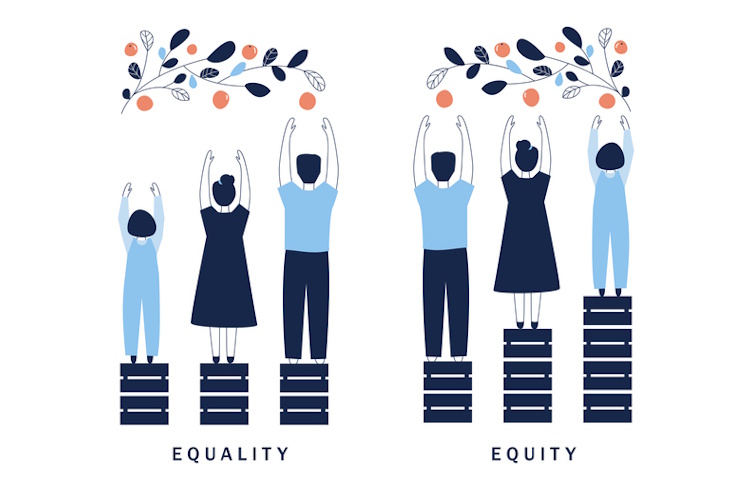
Equitable access means resources are adjusted so everyone has a fair chance to succeed. This is different to equal access where everyone has the same resources.

Two illustrations showing difference between equality and equity. In each, there are three people of different heights reaching for fruit on a tree. In the illustration for equality, all three are stood on a single box, so only the tallest figure can reach the fruit. In the illustration labelled equity, the three figures have different numbers of boxes, so they can all reach the fruit.

Ordinarily Available Provision

Ordinarily available provision (OAP), is provision that is available in every part of an educational establishment for every person, every day. Not every student will need everything that is available. It is the underpinning principle that enables an equitable, inclusive learning environment to be established, so that every student can succeed.

This starts with quality first teaching* and can be supplemented with a range of reasonable adjustments that can be made as they are needed to support a child or young person in their setting.

To find out more about the ordinarily available resources at your child or young person’s setting, read their school information report, or request the setting's SEND report. These documents set out what the setting offers as quality first, targeted and personalised provision. What is ordinarily available may vary by setting and may change over time according to resources, cohorts or other factors.

Personalised and highly personalised support is offered when a child or young person is not making expected progress, or the gap is widening between them and their peers. This is part of the Graduated Approach.

The Graduated Approach

Under the Graduated Approach different students receive different kinds of support.

All students receive:

Inclusive Support

Quality First Teaching with reasonable adjustments made as required.

Some students receive:

Inclusive Support

Quality First Teaching with reasonable adjustments made as required.

Personalised Support

Short-term group interventions for students with similar needs. Devised and monitored by staff.

A few students receive:

Inclusive Support

Quality First Teaching with reasonable adjustments made as required.

Personalised Support

Short-term group interventions for students with similar needs. Devised and monitored by staff.

Highly Personalised Support

Short-term individual provision to meet an individual student’s needs. May be devised with support from external professionals.

Reasonable adjustments

Reasonable Adjustments refer to adaptations that can be made to enable a disabled person to access the same activities as their peers in an equitable way.

Settings must consider what is fair and proportionate in each specific situation, taking into account factors like cost and practicality. This is legally bound under the Equality Act 2010.

Here are some examples of what could be considered reasonable adjustments. It is not an exhaustive list.

Kian has used his time out card to go to the quiet room.

Illustration of an Asian child with short, dark, wavy hair.

Rashmi’s needs are being met through inclusive support.

Illustration of a young Black girl with buns.

Molly’s needs are being met through inclusive support.

Illustration of a young white boy wearing a backwards facing cap.

Mike has a tablet to help him write.

Illustration of a young white child with long, light brown hair and glasses.

Ethan is sat at the front and given his own modified copy of the text.

Illustration of a young, smiling girl with long plaits. Next to her is a hearing aid symbol.

Sasha is sat at the front and background noise in the class is kept to a minimum.

Illustration of a young girl with short, dark hair wearing headphones.

Ava has noise cancelling headphones to use if it is too noisy.

Illustration of a young Black boy with cropped hair.

Malik’s needs are being met through inclusive support.

Illustration of a young, dark haired boy wearing a red jumper.

Thomas wears a slightly different type of jumper.

Illustration of a young white boy with blonde hair and glasses.

Toby uses different coloured paper to write and overlays to read.

Illustration of a young Black girl with an afro.

Fara has a person to take them to lunch and has an extra 5 minutes to resettle after break times.

Illustration of a young South Asian boy.

Raj can take meals in a separate room with a small group of friends rather than in the large busy cafeteria.

Illustration of a young girl with pigtails.

Tilly uses a wheelchair at a school currently without lift access, so subjects usually taught upstairs use a downstairs classroom.

Illustration of a young white boy with blonde hair.

Tom with medical needs has alternative arrangements made in order to take an exam.

Illustration of a young boy wearing glasses.

Cooper has an energy limiting condition and has a ‘buddy’ to carry school books. They are not penalised for lateness.

The SEND Code of Practice

The SEND Code of Practice* is a statutory document which outlines how to support children and young people’s SEND. It groups together different kinds of SEND into 4 areas. These are:

Communication and interaction

How children communicate, understand and play with others around them. This includes children with speech, language and communication needs.

Cognition and learning

This includes difficulty with learning or remembering basic skills. They may have difficulty with literacy or numeracy. They may learn at a slower pace than others.

Social, emotional and mental health

Factors which impact a child’s overall wellbeing. This includes emotions, social interactions, and relationships with others which may result in behaviours of concern.

Sensory and physical needs

This includes vision, hearing or multi-sensory impairments, physical disabilities or sensitivities to aspects of the environment.

Not every child or young person will have needs in all 4 areas, and some may change over time. In the same way, what works for one child may not work for another and may need to adapt over time. To make sure the support provided is right, once needs are identified, the graduated approach is used to monitor and review them over time.

All schools receive funding for children with SEND. This is known as the SEND notional budget. Schools are expected to use this funding to provide:

  • training
  • assessment
  • delivery of effective interventions*
  • relevant equipment 

Discussions regarding funding are the responsibility of the school and the local authority.

Assess - plan - do - review (the Graduated Approach)

An effective graduated approach should result in matching the support for a child or young person to their current needs. This enables them to make progress.

Each part of the assess, plan, do, review (APDR) cycle should be carried out in partnership with the setting, child or young person (if they wish, and are able) and parent carers. It should be specific, meaning that it is person-centred* and needs-led. Each cycle must be monitored appropriately and repeated if necessary.

Each setting will have documentation to record and monitor this process and may call them different things. Many settings use an individual learning plan*. Other terms may include individual education plan or support and achievement plan. This is different to an individual health care plan where more specific medical needs are set out.

The documentation should set SMART* outcomes or targets. It should also detail provision, strategies and interventions to support the child or young person towards these targets.

Assess

The process begins with a thorough assessment of the student’s needs. This creates a baseline understanding of the child’s strengths and areas for improvement. Information is gathered from different sources, including:

  • parent carers
  • teachers
  • specialists

This initial assessment helps identify specific learning difficulties or disabilities that require support.

People involved in the assess stage

Illustration showing two adults and three children.

Parent carers, child or young person, class teacher, SENCo.

Plan

Based on the assessment, a tailored support plan is developed. This plan outlines the specific interventions and strategies that will be put in place to support the students learning. Clear targets and deadlines for expected progress are made. Parent carers are involved in this planning process to make sure everyone is aligned and understands the process.

People involved in the plan stage

Illustration showing two adults and three children.

Parent carers, child or young person, class teacher, SENCo.

Do

The planned interventions are put into action. The student receives the necessary support under the supervision of the classroom teacher or designated staff. This phase focuses on implementing the strategies outlined in the plan to help the student progress in their learning.

People involved in the do stage

Illustration showing two adults and three children.

Parent carers, child or young person, class teacher, SENCo.

Review

The effectiveness of the support provided is regularly reviewed. This involves evaluating the student’s progress against the targets set in the plan. 

Reviews are typically conducted termly, and adjustments to the support plan are made as necessary based on the student’s ongoing needs and progress. Parent carers are kept informed throughout this process to make sure they are actively involved.

People involved in the review stage

An illustration showing two adults, three children, and three professional adults.

Parents carers, child or young person, class teachers, SENCo and other professionals as required.

Repeat

Repeat the cycle if needs are not being met or development is not as expected. It is common to go through this cycle multiple times and to keep adjusting the targets and provision as necessary.

Children and young people’s support needs may change over time. The cyclical nature of assess, plan, do, review allows for these to be managed and support adjusted as required.

The SEND code of practice suggests schools should meet with parent carers 3 times a year. It also sets out the requirement for collaborative working, meaning parent carers and children or young people can provide their point of view. The decision to involve specialists can be taken at any time.

Sometimes one cycle of the assess, plan, do, review process is all that is needed and the child or young person starts to make progress with the support put in place. For others, the review stage may flag that different support is needed or that progress is not what was expected. This means the cycle continues. It can take several cycles to address multiple needs as not all can be worked on at the same time. The plan must be ongoing and reviewed regularly.

There may come a time when challenges or barriers arise that means the support being offered needs to be increased beyond what is ordinarily available. This means that the cycle has been followed and more support is needed. This is known as SEND support and can be personalised or highly personalised depending on the identified need. 

SEND support is implemented under the same principle of assess, plan, do, review. If at least 2 cycles of APDR demonstrate the interventions are not having the intended impact, it may become apparent that the child requires a greater level of support. At this point, applying for an education, health and care needs assessment* (EHCNA) might be the next step.

You can find more details on the IPSEA website and our education, health and care needs assessment page.

Who to speak to

It is important to know who to ask for more information at the relevant setting. You might choose to do this in person or in writing.

Birth to 5 years

SEND may have been identified before, during or after birth (for example concerns over developmental milestones not being met). In Bracknell Forest, you can seek help through the Child Development Centre. You can also be referred by a health visitor, GP, hospital or outreach workers.

If your child is in an early years foundation stage (EYFS)* setting you can speak to their key worker, teacher, the manager or SENDCo* about needs as they arise.

5 to 11 years

If your child or young person has support in place already, this should transition to the school setting. The school should involve you in their monitoring and reviewing of any support needed. If this is the point that you start to notice emerging needs, you can speak to the class teacher or SENDCo.

11 to 16 years

Becoming a young adult can be more challenging for those with SEND and so their needs may change during this stage. This could also be the first time you start to see additional needs developing. There will be many people yourself and your child or young person will be collaborating with at the setting. This may include:

  • the SENDCo
  • teachers
  • school nurses
  • counsellors
  • the pastoral support team

16 to 25 years

At this transition into adulthood, support should remain in place. This could be in:

  • further education settings
  • vocational training establishments
  • supported internships
  • apprenticeships

Bracknell Forest works with many local providers to offer a range of these opportunities.

Education, social and health officers should also support the transition into relevant adult services. At these types of settings or establishments, the contacts may be known as learning support, inclusion, student support or high needs director. 

Every journey for families of children or young people with SEND is going to look different depending on a child or young person’s needs, but there are lots of resources available. The additional needs info hub (also called the SEND local offer*) is a guide that all local authorities must publish. It tells parent carers, young people, and professionals about services and support available. This includes information on:

  • education
  • health and care services
  • peer support groups
  • financial assistance
  • medical signposting
  • general SEND advice from IASS (information, advice and support service)

Go to the Additional Needs Info Hub (SEND Local Offer)

Many support groups exist for young people with SEND. Some of these provide help and support for them to express their views and wishes and advocate for themselves when it comes to their future. This makes sure they feel that their voice is being heard. 

More information on groups can be found on the additional needs info hub, including:

More information and support

IPSEA - Independent provider of special education advice

IPSEA is the leading charity of SEND law in England. They help you navigate the system and secure support.

IASS

IASS provides SEND support and advice for children, young people and their families in Bracknell Forest.

Parent Carer Forum

The Bracknell Parent Carer Forum is a partnership forum between parent carers of children with SEND and key professionals.

The Local Offer

The Local Offer aims to have accurate and easy to understand information about SEND services, and how to access them, all in one place.

NHS Health and Care Passports

NHS Health and Care Passports are recommended for people with a learning disability and autistic people. The passports can be updated in response to changes in their health and wellbeing and interaction in the health and care services they use.

The Early Help Assessment

The Early Help Assessment is a process that aims to support children who need additional help. It helps to establish the child's needs and looks at ways in which they can be best supported.

Empowering Futures

Empowering Futures (PDF, 1.25MB) is Bracknell Forest children's social care’s commitment to children with SEND. 

Key terms

Education, health and care needs assessment (EHCNA)

The first step of the statutory process towards an education, health and care plan (EHCP). It is an assessment of a child’s or young person’s education, health and care needs. It is a legal process and as such there are statutory processes and timescales that the local authority must meet in making their decisions. If the assessment results in the issuing of an EHCP, the Local Authority then becomes legally responsible for ensuring the provisions detailed within the plan at the appropriate setting.

Early years foundation stage (EYFS)

The framework used in England to support the learning, development, and care of children from birth to age 5.

Holistic

Supporting children and young people with SEND by considering their entire being, not just their academic or specific learning needs. It recognises that various factors, such as their social, emotional, and physical development, influence their overall well-being and learning.

Intervention

A short-term focused teaching approach that will typically have a specific set of outcomes planned for a child with additional needs. SEND interventions must be used alongside high quality teaching methods so that children with SEND in a class feel as supported as possible.

Ordinarily available provision (OAP)

OAP is broken down into 3 levels. These are:

  • inclusive provision for all – reasonable adjustments which are made available to all students across all settings
  • personalised provision for some students – short-term, small group interventions, that would be devised by the setting staff and monitored through the APDR process
  • highly personalised provision for a few students – short-term, individual interventions, devised with advice and support from outside professionals and monitored through the APDR process

Parent carer

A parent, or other adult with parental responsibility, who provides significant care and support to a child or young person with additional needs, such as disabilities or other conditions. This goes beyond the typical parental role.

Person-centred approach

Focusing on the needs of an individual, ensuring that their preferences, needs and values guide decisions, and providing care that is respectful of and responsive to them.

Preparing for adulthood (PfA)

The support on offer to young people with SEND as they move into adulthood. PfA usually focuses on 4 pathways, helping young people to achieve the best outcome in:

  • higher education or employment
  • independent living and housing options
  • participating in the local community and society
  • having positive relationships
  • good Health

Quality first teaching (QFT)

A high-quality teaching approach used in schools to make sure that every child receives the best possible education in the classroom. It focuses on well-planned lessons, engaging teaching methods, and tailored support to help all children succeed, including those who may need extra help. It may also be referred to as high quality teaching.

Screeners

Quick toolkits that education staff can use to assess for difficulties with speech and language.

SMART targets

The SMART framework helps in setting clear, attainable and effective outcomes and targets by ensuring they are well defined and trackable. SMART stands for:

  • specific
  • measurable
  • achievable
  • relevant
  • time-bound

Special educational needs and disability (SEND)

A child or young person has special educational needs and disabilities if they have a learning difficulty and/or a disability that means they need special health and education support.

SENDCo

SENDCo stands for special educational needs and disabilities coordinator. They are a qualified teacher responsible for leading the school’s provision for and the support offered to students with SEND. The SENDCo works with other staff within the school, parent carers and external professionals to develop, implement and monitor individual support and learning plans for students with SEND.

SEND register

A list maintained by schools which tracks students identified as needing additional support. It helps schools make sure that SEND students receive the right support.